Pachamama's Gift
An Andean/Inca Tale
South America — Andean/Inca
The Mother of Everything
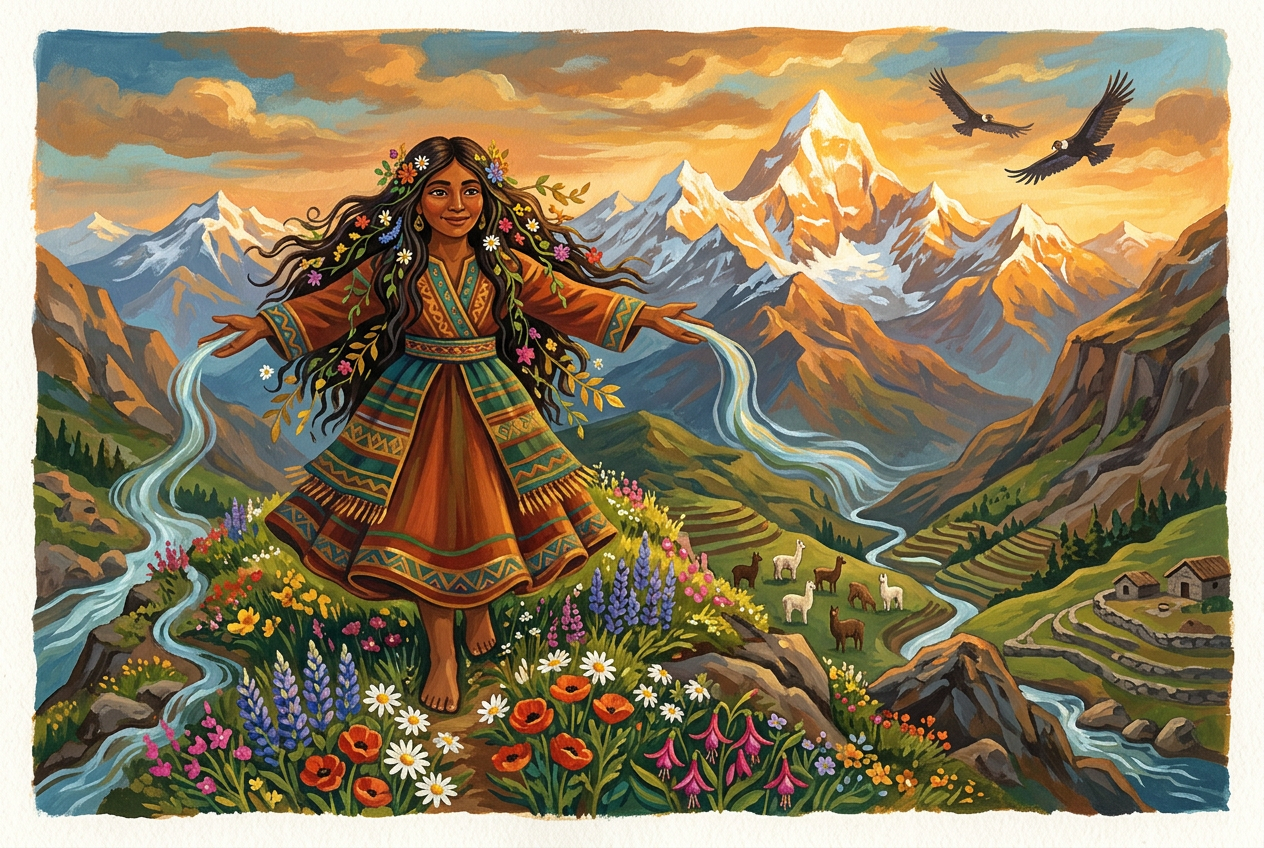
High in the mountains where the clouds touch the earth, there lived a goddess named Pachamama. She was the mother of everything — the rivers and the rocks, the llamas and the condors, the potatoes growing underground and the corn reaching for the sky.
Pachamama loved all her children. She fed the soil so crops would grow. She filled the rivers with cool, clear water. She painted the sunsets pink and gold over the mountain peaks. And in return, she only asked for one thing: to be remembered.
The Village in the Valley
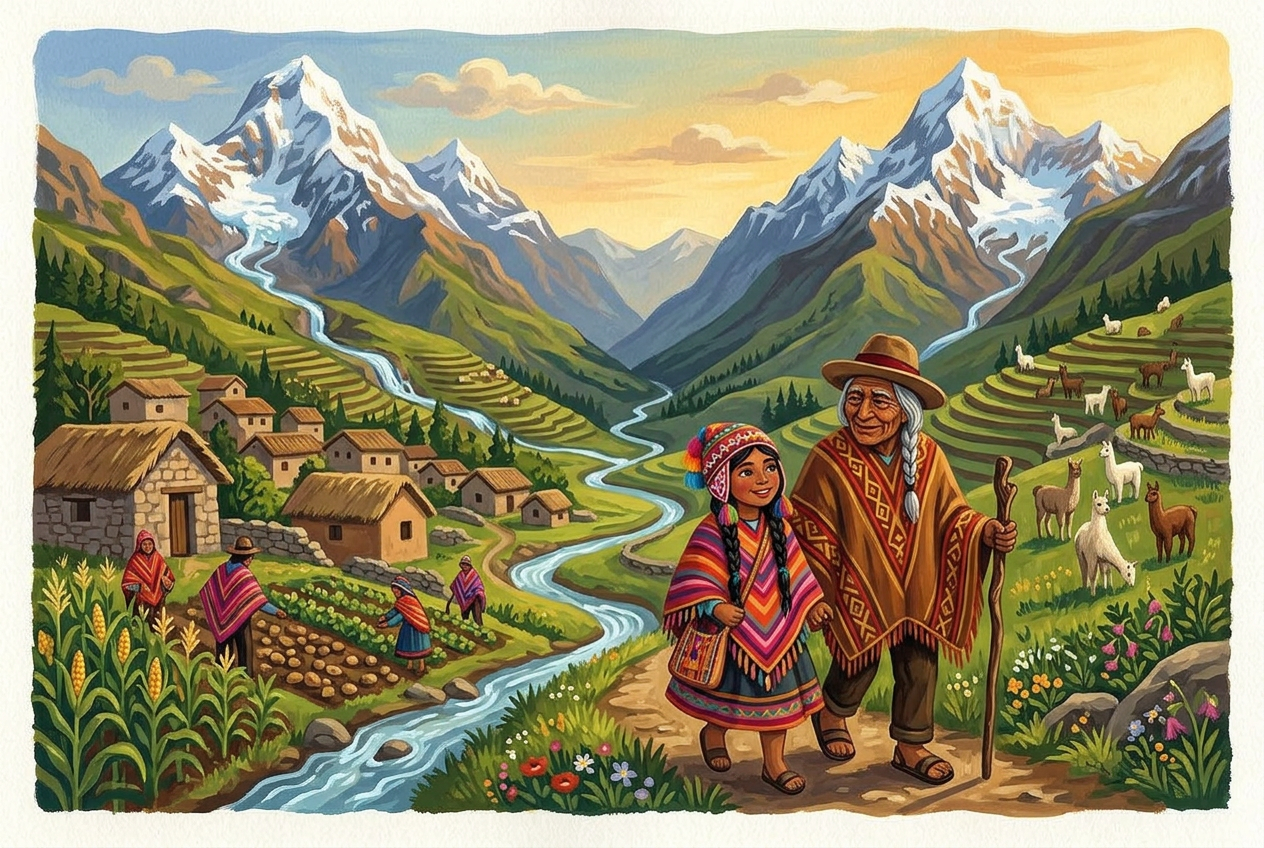
In a green valley between two great mountains lived a small village. The people there grew potatoes and corn in terraced fields carved into the hillside. Llamas grazed on the slopes, and clear streams tumbled down from the glaciers above.
Every family knew Pachamama's name. Before they planted seeds, they thanked her. Before they ate, they poured a little drink onto the ground for her. "For you, Pachamama," they would say with a smile.
Abuelo's Ceremony
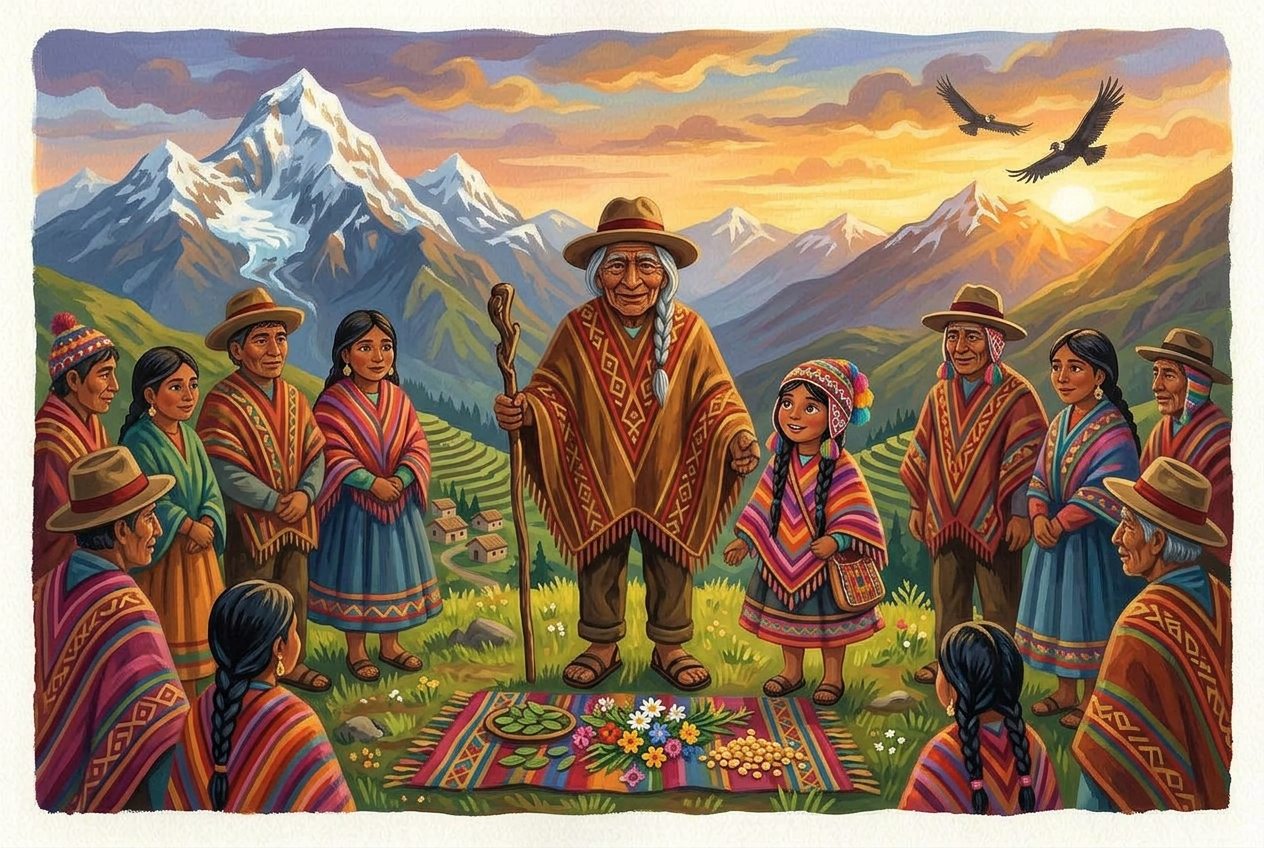
Old Abuelo Tupaq knew the ceremonies best. Every harvest season, he gathered the whole village in a circle. He placed coca leaves and bright flowers on a colorful woven cloth spread upon the ground.
"We give thanks to Pachamama," he said, his voice strong and clear. "She gives us everything. And so we give a little back." Little Kusi, his granddaughter, watched with wide eyes as the offerings were buried gently in the earth. She could almost feel the ground hum with happiness.
The Forgetting
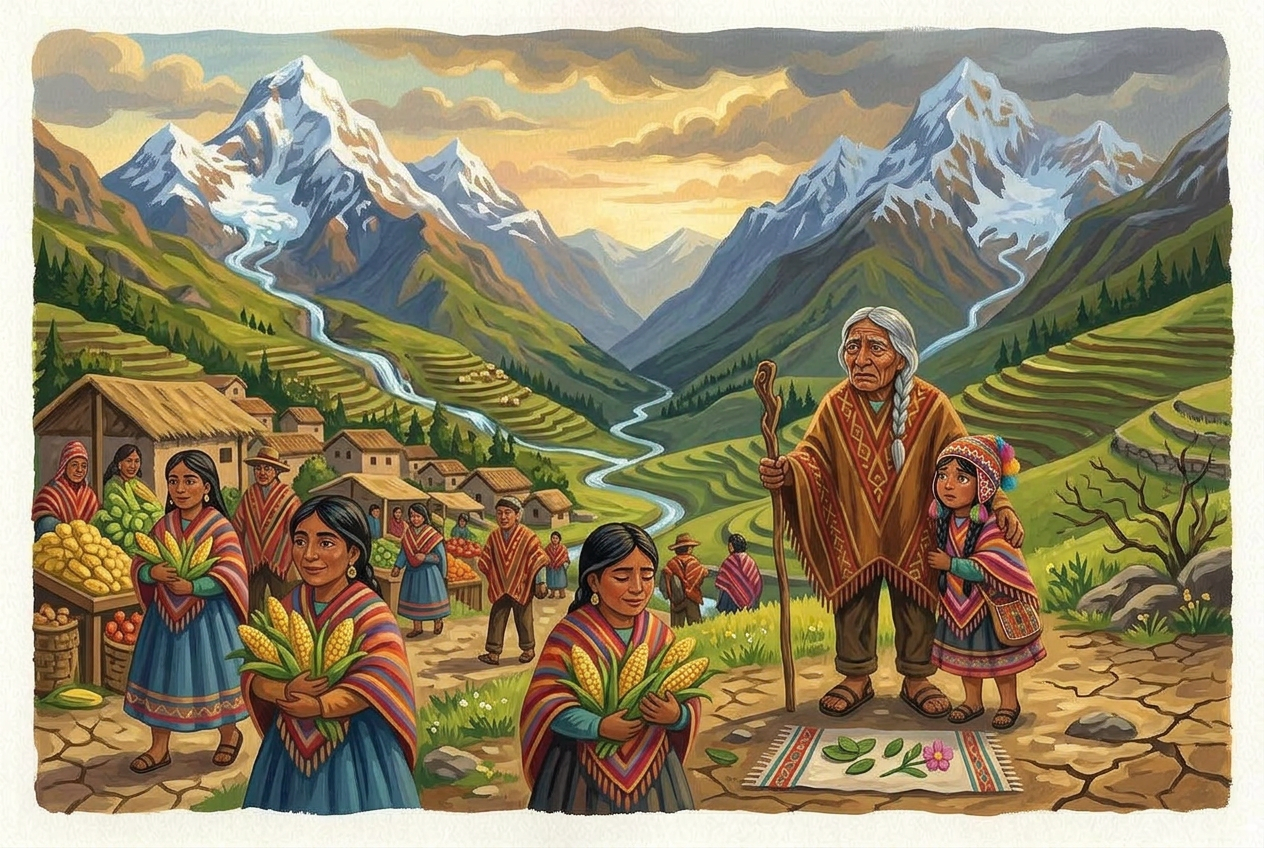
But as the years passed, the harvests were so plentiful that people began to forget. "Why waste good food on the dirt?" some said. "The crops grow on their own."
They stopped pouring drinks for Pachamama. They stopped laying flowers on the earth. They pulled more and more from the soil without giving anything back. Only Abuelo Tupaq and little Kusi still remembered. "Pachamama is listening," Abuelo warned. But nobody listened to him.
The Earth Grows Quiet
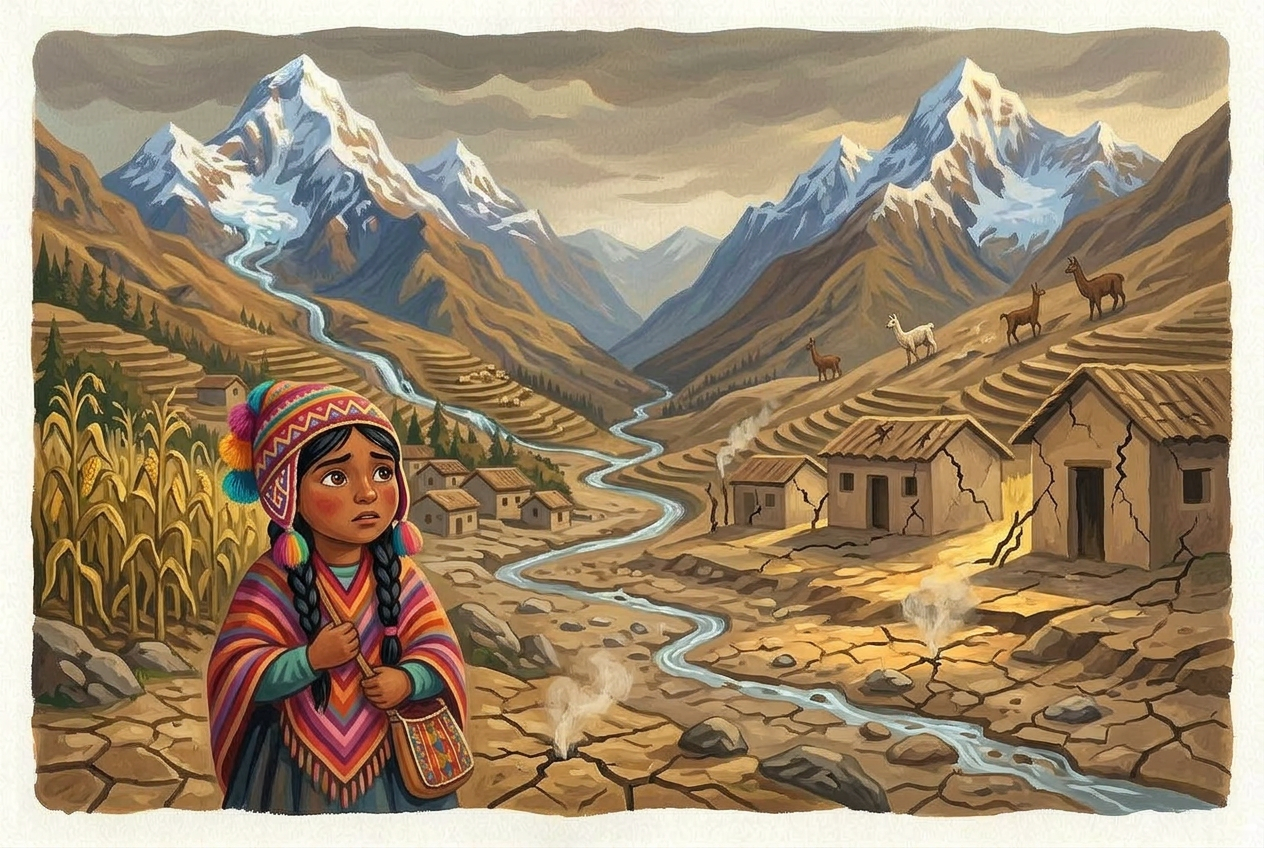
Then one morning, the river slowed to a trickle. The next week, the corn stalks turned yellow and drooped. The potatoes came up small and bitter. The llamas wandered higher and higher up the mountain, searching for green grass that wasn't there.
The ground itself seemed to sigh. Deep beneath the village, a low rumble shook the walls of the houses. Pachamama was hungry. Pachamama was sad. And when Mother Earth is sad, everyone feels it.
Kusi Remembers
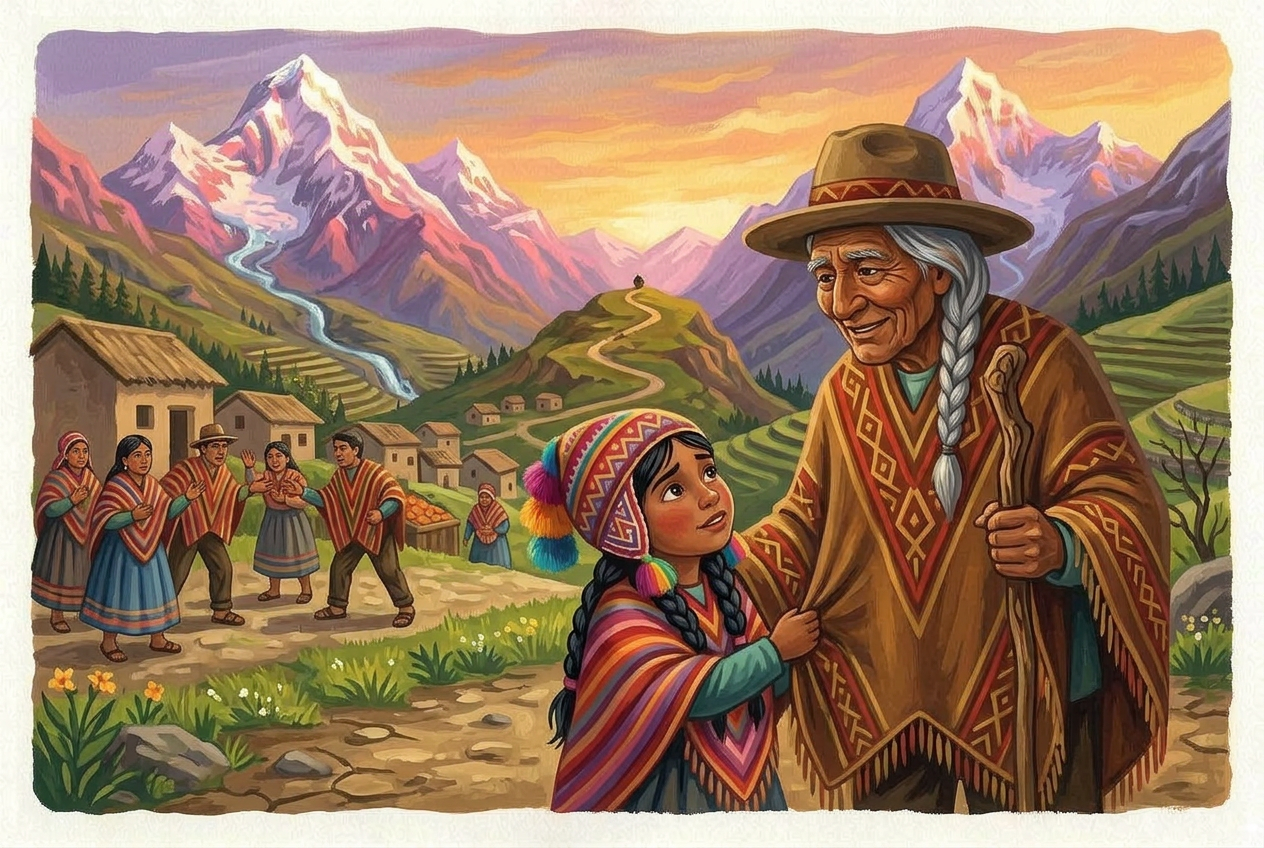
While the grown-ups argued about what to do, Kusi tugged on Abuelo's sleeve. "I remember what you taught me," she said quietly. "Can we do the ceremony? Just us?"
Abuelo Tupaq smiled, his eyes crinkling. "Pachamama doesn't need a big ceremony," he said. "She just needs a grateful heart." Together, they walked to the top of the hill as the last light of sunset painted the mountains gold.
The Offering
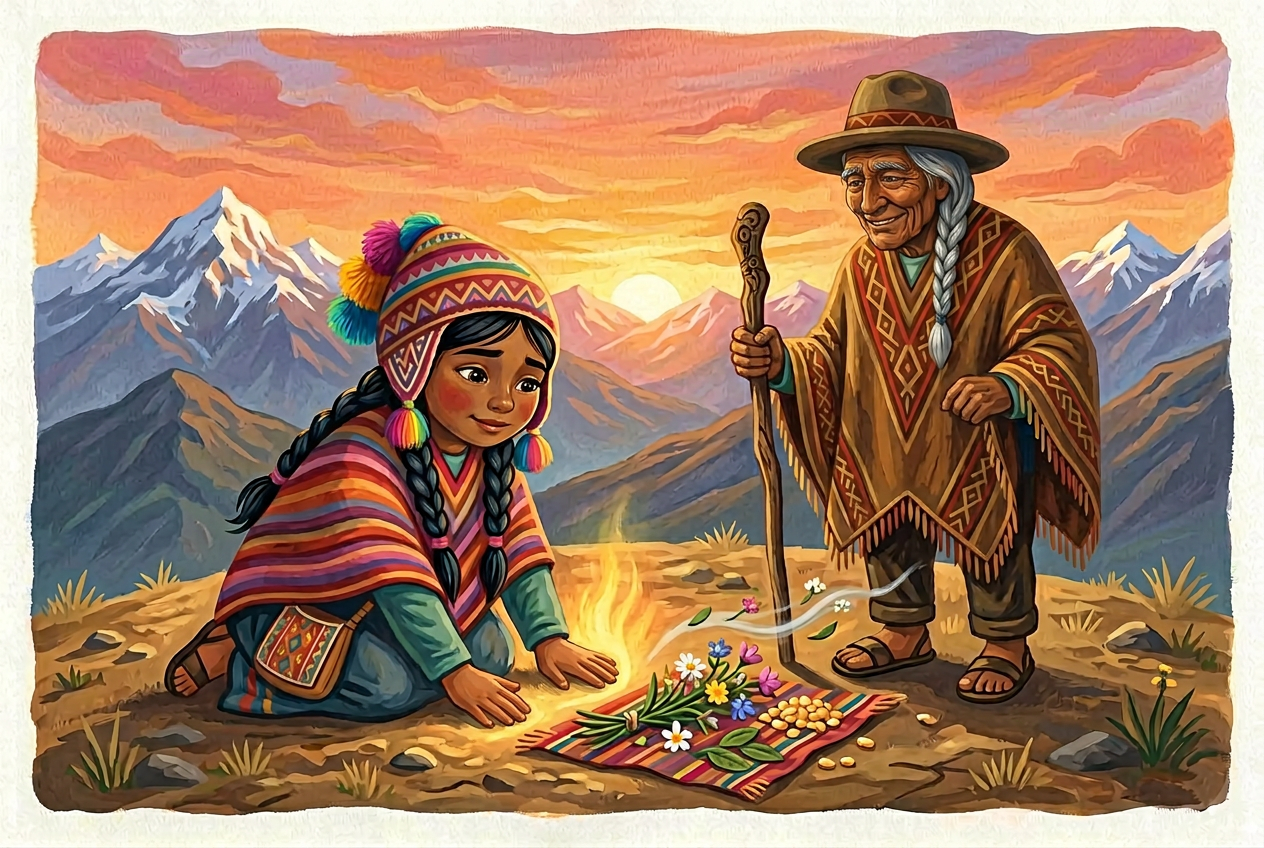
Kusi spread her small woven cloth on the ground. She placed wildflowers she had picked, a few precious corn kernels, and the last bright coca leaves from Abuelo's pouch. Then she knelt and pressed her small hands into the cool earth.
"Thank you, Pachamama," she whispered. "Thank you for the mountains and the water and the food. We forgot, but I remember now. I promise we won't forget again."
The wind stirred. The flowers on the cloth seemed to glow. And deep in the earth, something shifted.
The Earth Smiles Again
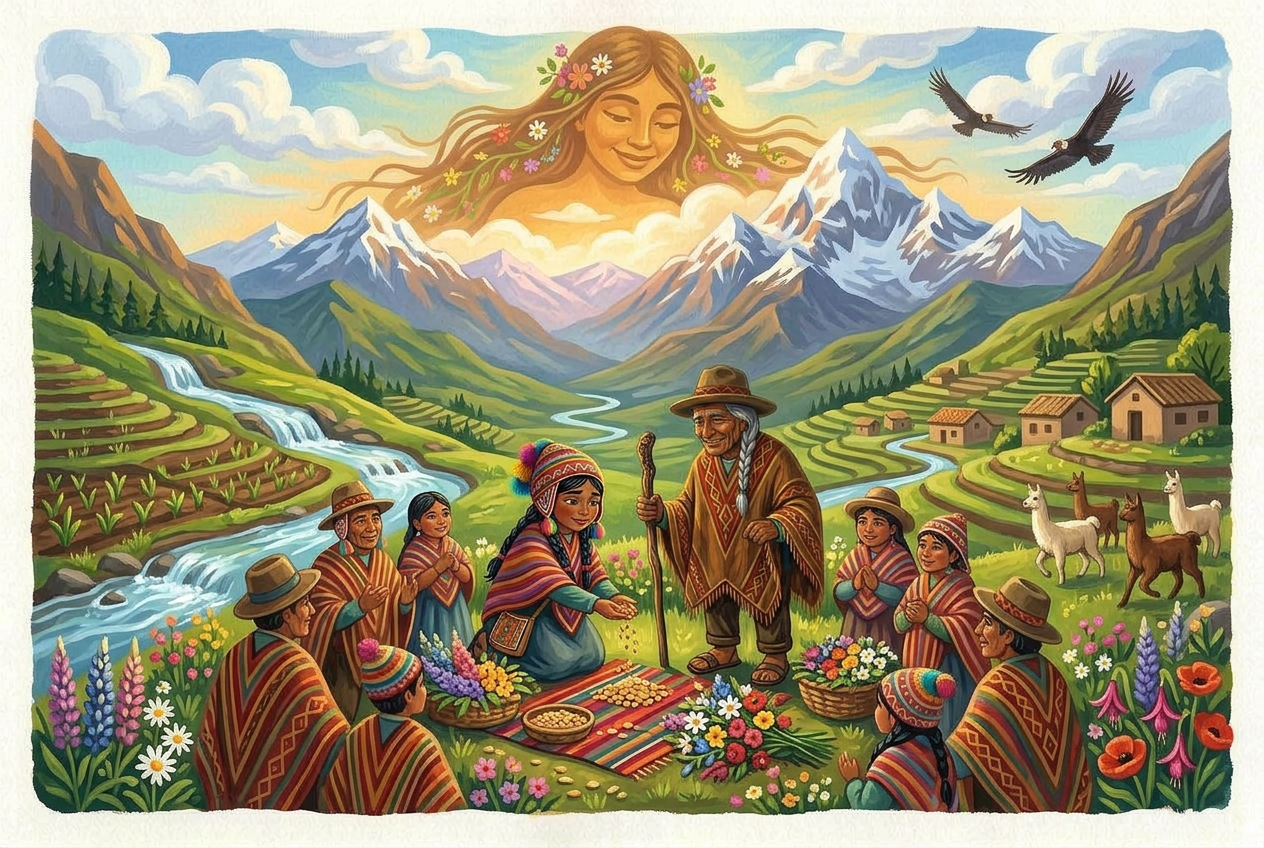
By morning, the river was flowing strong again. Green shoots pushed up through the dry soil. The llamas came trotting back down the mountain, and fat white clouds drifted over the valley, promising gentle rain.
The villagers saw what Kusi had done, and they understood. From that day on, they always remembered to thank Pachamama — with flowers and offerings, with songs and grateful hearts. And Pachamama smiled beneath them, warm as the sun on the mountainside, because her children had finally remembered the most important thing of all: to say thank you.